News
President Trump’s Plan to Bring in 300K Tons of Beef at Lower Tariffs Hasn’t Helped Retail Prices


President Donald Trump’s beef plan is not meating expectations.
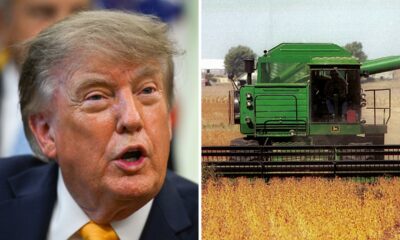
In August, Trump, 80, “signed a Proclamation to temporarily increase the quantity of lean beef trimmings that are imported with no above-quota tariff,” per a White House press release.
“As we work to rebuild this herd and help our ranchers, for the next 90 days, the United States will allow up to 300,000 metric tons of product for ground beef to be imported with no out of quota tariff,” the president wrote on Truth Social at the time. “We have a commitment that this beef will be sold at 25 percent below current market prices. This deal will reduce prices for Americans while giving space for our Great American Beef Herd to grow again.”
However, Fortune reported that as of October 19, the U.S. has imported just 59,423 metric tons of beef — 20 percent of the target — according to U.S. Customs and Border Protection data.

As for pricing, ground beef averaged $6.79 per pound as of September, down from $6.92 in August but still higher than $6.32 a year ago, the outlet noted, citing Bureau of Labor Statistics data.
Derrell Peel, a professor of agribusiness at Oklahoma State University, told the outlet that “The simple assumption there was that if we can just increase supply of beef in the U.S., that should lower prices,” but “unfortunately, the beef industry is much more complex than that.”
One reason the beef costs aren’t coming down is that the type of beef coming in from overseas doesn’t usually hit the grocery store aisle, Peel told the publication. Instead, lean beef trimmings often get combined with fatty trimmings from American cattle for use by fast food restaurants. The lean trimmings already meet demand, so more of it doesn’t help retail pricing.

“When you take away the tariff, you make it cheaper, but you don’t necessarily increase the demand because we only need so much of it,” Peel said. “We were getting as much as we wanted.”
Glynn Tonsor, an agricultural economics professor at Kansas State University, told Fortune that, to bring prices down in the long term, the commander in chief should have let prices rise, noting, “If you erode beef demand, you will erode beef prices.”
Tonsor explained that if prices stayed high, demand would eventually diminish and prices would ease, but that would mean there would be no need for the 300,000 metric tons of beef.